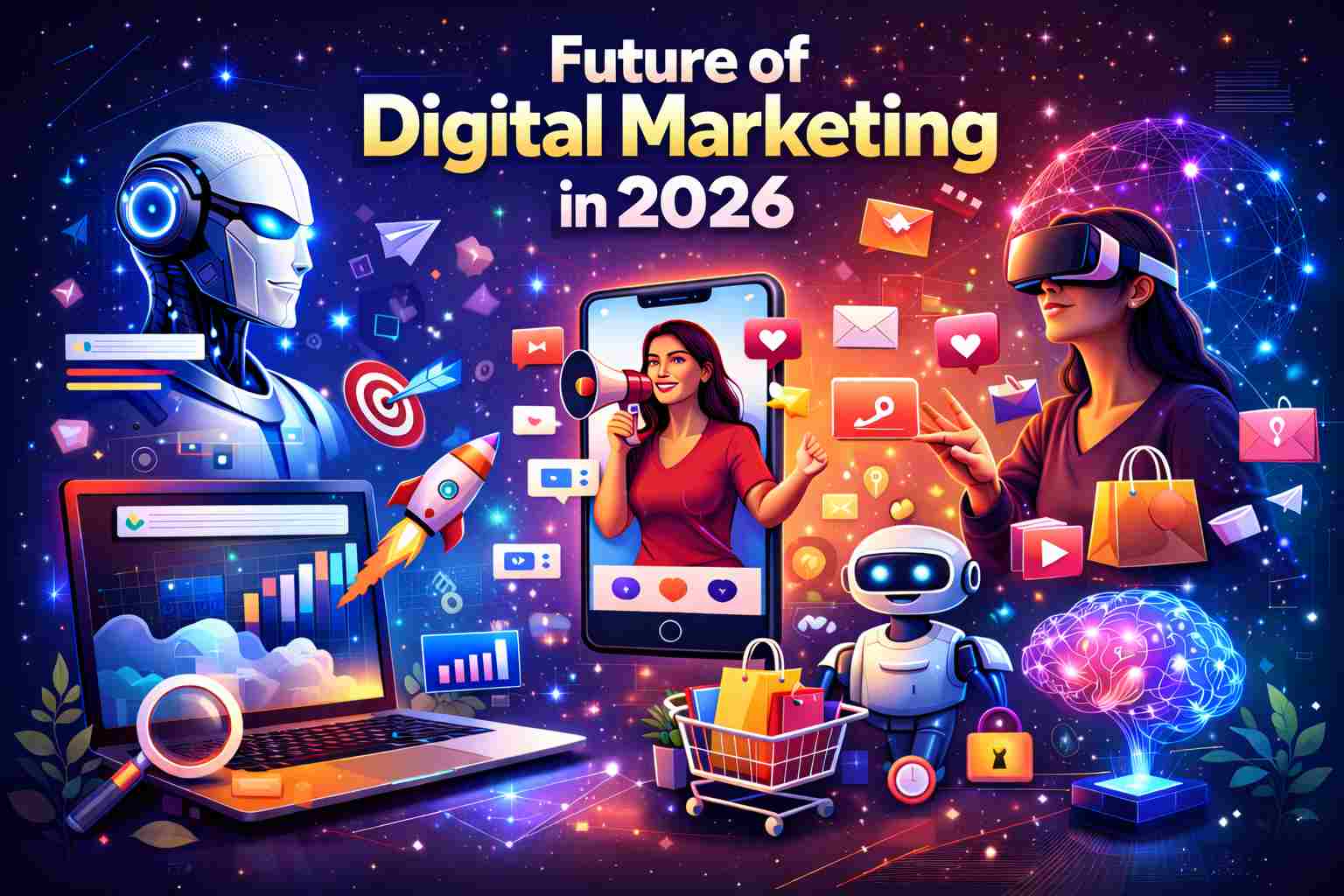
Future of Digital Marketing in 2026: How Technology, AI & Consumer Behavior Will Redefine Growth
Digital marketing is entering a transformative phase. By 2026, rapid innovation in artificial intelligence, automation, data privacy, and consumer expectations will fundamentally reshape how brands connect with audiences. The future of digital marketing in 2026 is not just about visibility—it is about relevance, trust, and measurable impact.
Businesses that evolve with these changes will build stronger digital ecosystems, while those relying on outdated tactics may struggle to compete.
1. Artificial Intelligence Will Become the Backbone of Digital Marketing
Table of Contents
In 2026, AI will no longer be a supporting tool—it will be the core engine driving digital marketing strategies. From campaign planning to execution and optimization, AI-powered systems will handle complex data processing and real-time decision-making.
AI will enable:
- Predictive customer behaviour analysis
- Automated content and ad creation
- Smart budget allocation and bidding
- Advanced personalisation across channels
Rather than replacing marketers, AI will empower them to focus on strategy, creativity, and innovation.
2. Hyper-Personalization Will Define Customer Experience
The future of digital marketing revolves around customer-centric personalization. Consumers in 2026 expect brands to understand their needs and deliver tailored experiences across every touchpoint.
Personalization strategies will include:
- Dynamic website content based on user intent
- Behavior-based email and messaging campaigns
- Personalized product recommendations
- Contextual ads aligned with the buyer journey
Brands that master personalization will see higher engagement, repeat purchases, and long-term loyalty.
3. Privacy-First and Trust-Based Marketing Will Be Essential
With growing awareness around data security and privacy regulations, digital marketing in 2026 will prioritize transparency and ethical data usage. Consumers will choose brands they trust with their information.
Key privacy-focused practices include:
- First-party data collection strategies
- Clear consent management systems
- Transparent communication about data usage
- Secure data storage and compliance
Trust will become a competitive advantage in the digital marketplace.
4. Voice, Visual, and Conversational Search Will Reshape SEO
Search behavior is evolving beyond typed queries. By 2026, voice assistants, smart devices, and visual search tools will play a major role in how users discover information.
Future-ready SEO strategies will focus on:
- Conversational and long-tail keywords
- Question-based content formats
- Image and video optimization
- Strong local SEO presence
Optimizing content for natural language search will be critical for visibility.
5. Video and Interactive Content Will Dominate Engagement
Video will continue to be the most powerful content format in 2026, especially short-form, interactive, and immersive experiences. Audiences prefer visual storytelling that delivers value quickly.
Trending content formats include:
- Short videos and reels
- Live streaming and real-time interactions
- Shoppable and interactive videos
- Educational micro-content
Brands using interactive content will achieve higher engagement and conversion rates.
6. Social Media Will Evolve Into a Full-Funnel Sales Platform
Social platforms are no longer limited to brand awareness. In 2026, social media will act as a complete customer journey—from discovery to purchase.
Key developments include:
- In-app shopping and checkout
- Influencer-driven buying decisions
- User-generated content as social proof
- Community-based brand engagement
Social commerce will reduce friction and accelerate conversions.
7. Influencer Marketing Will Focus on Credibility Over Reach
The future of influencer marketing emphasizes authenticity rather than follower count. Micro and nano influencers with niche audiences will deliver better engagement and trust.
Brands will prefer:
- Long-term influencer partnerships
- Performance-based collaborations
- Honest storytelling and real experiences
- Community-focused campaigns
Authenticity will outperform traditional promotional content.
8. Marketing Automation and Omnichannel Integration
As customer journeys become more complex, marketing automation will be critical in 2026. Brands must deliver consistent experiences across websites, email, social media, apps, and messaging platforms.
Automation benefits include:
- Efficient lead nurturing
- Real-time campaign optimization
- Personalized omnichannel communication
- Improved customer retention
Seamless integration across platforms will be a key success factor.
9. Performance-Driven Digital Marketing Will Lead Growth
Vanity metrics will lose importance in the future. Digital marketing strategies in 2026 will be evaluated based on measurable business outcomes.
Key performance indicators include:
- Conversion rate optimization
- Customer acquisition cost (CAC)
- Customer lifetime value (CLV)
- Engagement quality
Data-driven decision-making will ensure sustainable growth and higher ROI.
Conclusion
The future of digital marketing in 2026 is intelligent, ethical, personalized, and performance-focused. AI-driven insights, privacy-first strategies, interactive content, and omnichannel experiences will shape how brands grow in a competitive digital environment. Businesses that adapt early and invest in future-ready strategies will build stronger customer relationships and long-term success.
Frequently Asked Questions (FAQs)
1. What will digital marketing look like in 2026?
Digital marketing in 2026 will be powered by AI, focused on personalization, privacy, video content, and measurable performance.
2. Will AI replace digital marketers in the future?
No. AI will support marketers by automating tasks and providing insights, but human creativity and strategic thinking will remain essential.
3. Is SEO still important in the future of digital marketing?
Yes. SEO will evolve with voice search, visual search, and intent-based optimization but will remain a core digital strategy.
4. How important is data privacy in digital marketing?
Data privacy is critical in 2026, as consumers demand transparency and secure handling of personal information.
5. What digital marketing skills will be most valuable in 2026?
AI literacy, data analysis, content strategy, automation tools, and customer experience management will be highly valuable.
6. Will social media still influence purchasing decisions?
Yes. Social media and social commerce will strongly influence how consumers discover and buy products.