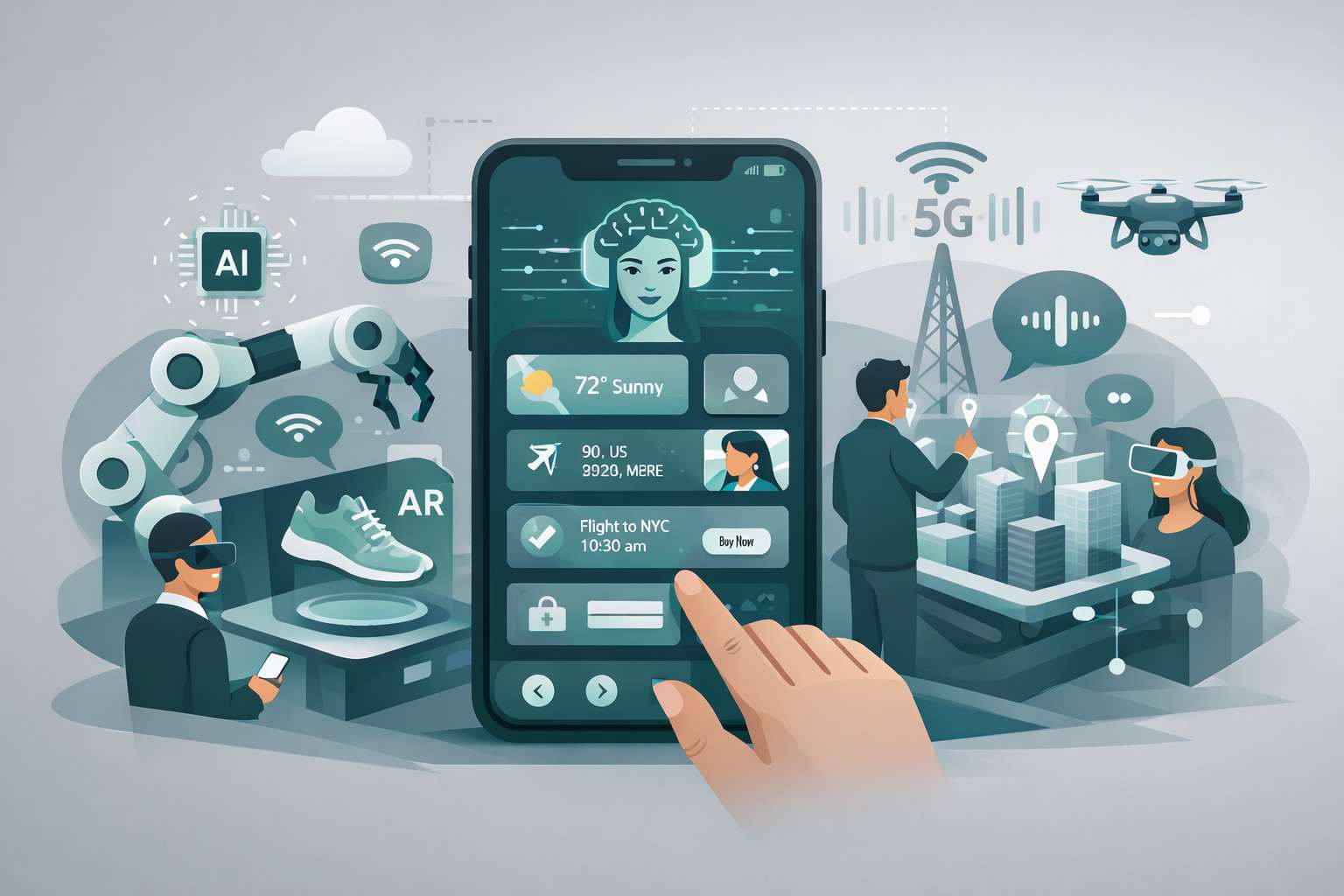
Mobile App Trends in 2026 That Are Reshaping User Expectations
Mobile applications are no longer just digital tools—they are becoming intelligent companions that understand users, predict needs, and deliver seamless experiences across devices and platforms. As we move deeper into 2026, user expectations have evolved dramatically, driven by advancements in artificial intelligence, connectivity, and immersive technologies.
Today’s users expect speed, personalisation, privacy, and simplicity—all at once. This shift is forcing businesses and developers to rethink how mobile apps are designed, built, and optimized.
Let’s explore the key mobile app trends in 2026 that are redefining how users interact with apps and what they now expect as the baseline experience.
AI-First Mobile Applications Become the Standard
Table of Contents
In 2026, artificial intelligence is no longer an add-on feature—it is the foundation of modern mobile apps. Users now expect apps to learn from their behaviour and improve automatically over time.
AI-first apps are capable of:
- Adapting interfaces based on user preferences
- Predicting next actions before users ask
- Delivering real-time recommendations
- Automating repetitive tasks
From shopping and finance to fitness and education, users expect apps to think, respond, and evolve just like a human assistant.
Hyper-Personalisation Replaces Generic User Experiences
One-size-fits-all experiences no longer work. Users in 2026 expect apps to feel custom-built for them.
Modern personalization goes beyond names and location. Apps now analyse:
- Behavioural patterns
- Usage frequency and timing
- Content preferences
- Interaction history
As a result, every user sees a different interface, content flow, and feature priority. Apps that fail to personalize feel outdated and irrelevant, leading to faster uninstall rates.
On-Device AI for Speed, Privacy, and Offline Intelligence
Users want instant results without compromising privacy. This has fueled the rise of on-device AI, where data is processed directly on the smartphone instead of the cloud.
Key benefits users now expect:
- Faster response times
- Reduced internet dependency
- Better data privacy
- Offline AI-powered features
This trend is reshaping expectations around security, performance, and trust—especially in finance, healthcare, and productivity apps.
Voice, Chat, and Multimodal Interfaces Take Over
Typing is no longer the primary interaction method. In 2026, users expect apps to support voice commands, conversational chat, gestures, and visual inputs.
Popular use cases include:
- Voice-based navigation
- AI chat assistants inside apps
- Visual search using camera input
- Hands-free controls
Apps that still rely only on traditional touch interfaces feel slow and inconvenient compared to multimodal experiences.
Super Apps Redefine Convenience
Users want fewer apps that do more. This expectation has led to the rapid rise of super apps—platforms that combine multiple services into a single ecosystem.
In 2026, users expect:
- Payments, messaging, services, and support in one app
- Seamless transitions between features
- Unified login and identity
Super apps reduce app fatigue and deliver unmatched convenience, setting new standards for user loyalty and engagement.
Immersive Experiences with AR, VR, and Spatial UI
Augmented Reality (AR) and Virtual Reality (VR) are no longer niche technologies. Users now expect interactive and immersive experiences in shopping, education, gaming, and real estate apps.
Examples include:
- Virtual try-ons in retail apps
- 3D product exploration
- Interactive learning environments
- Location-based AR experiences
These technologies are transforming passive users into active participants.
Privacy-First Design Becomes a User Demand
With growing awareness around data usage, users in 2026 actively choose apps that respect privacy.
Modern users expect:
- Transparent data policies
- Minimal data collection
- AI-powered security features
- Control over permissions
Apps that prioritize privacy build trust, while those that ignore it struggle with retention and reputation.
Lightning-Fast Performance Is Non-Negotiable
Thanks to 5G and advanced device hardware, users now expect instant app responses. Even a few seconds of delay can lead to abandonment.
Performance expectations include:
- Near-zero loading time
- Smooth animations
- Real-time updates
- Battery-efficient processing
Speed is no longer a competitive advantage—it is a basic requirement.
Predictive UX and Proactive App Behavior
In 2026, users expect apps to act before they ask.
Predictive UX enables apps to:
- Suggest actions at the right moment
- Anticipate user needs
- Reduce manual input
- Deliver context-aware notifications
This proactive behavior creates frictionless experiences and increases long-term engagement.
Seamless Cross-Platform Experiences
Users switch between smartphones, tablets, wearables, and desktops constantly. They now expect apps to provide consistent experiences across all devices.
Key expectations include:
- Real-time data sync
- Unified design language
- Continuity across devices
- No repeated setup or onboarding
Apps that fail to maintain consistency lose user trust quickly.
Ethical AI and Responsible Design Influence User Choice
Users are becoming more conscious of how AI influences decisions. Ethical AI is no longer a backend concern—it directly impacts user perception.
Modern users expect:
- Bias-free recommendations
- Explainable AI decisions
- Responsible automation
- Human override options
Trustworthy apps are winning loyalty in 2026.
FAQs: Mobile App Trends in 2026
What is the biggest mobile app trend in 2026?
AI-first app development is the biggest trend, with apps designed to learn, adapt, and personalize experiences automatically.
Why is personalization so important for mobile apps now?
Users expect apps to reflect their preferences, behavior, and needs. Generic experiences lead to low engagement and high uninstall rates.
Are super apps replacing traditional mobile apps?
Super apps are reducing the need for multiple apps by offering several services in one platform, but niche apps still thrive with focused experiences.
How does on-device AI improve user experience?
On-device AI delivers faster responses, better privacy, offline functionality, and reduced dependency on cloud processing.
What role does privacy play in mobile app success?
Privacy is a key decision factor. Users prefer apps that are transparent, secure, and respectful of personal data.
Will AR and VR become mainstream in mobile apps?
Yes. AR and immersive features are becoming standard in retail, education, gaming, and real estate apps.
Final Thoughts
Mobile app trends in 2026 are not just about technology—they are about user expectations. Today’s users want apps that are fast, smart, intuitive, secure, and deeply personal.
Businesses that align their mobile strategies with these evolving expectations will build stronger engagement, higher retention, and long-term brand trust. Those that don’t risk becoming irrelevant in an increasingly intelligent app ecosystem.
Trending