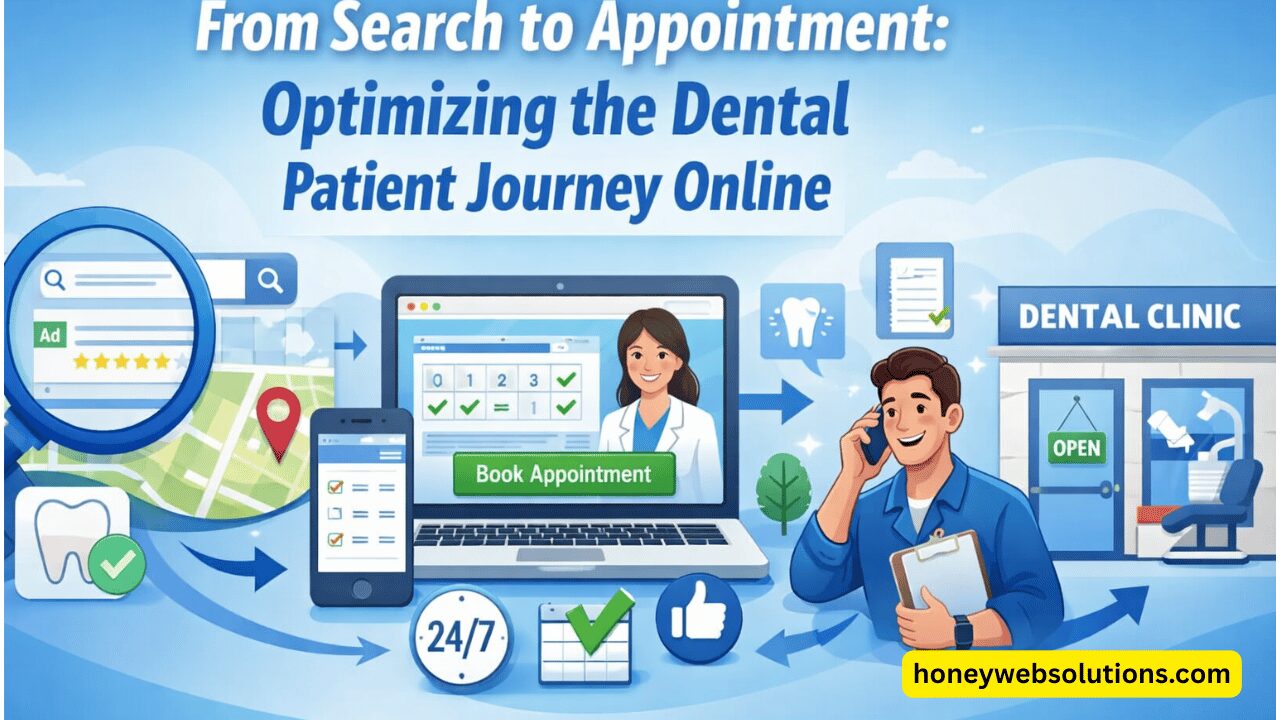
From Search to Appointment: Optimizing Your Dental Website’s Patient Journey
Your dental website isn’t just a digital business card. It’s the bridge between someone typing “dentist near me” at 2 AM with a toothache and that same person sitting in your chair the following week. The path from that initial search to a booked appointment should be smooth, intuitive, and reassuring. When it’s not, potential patients slip away to competitors who’ve figured out the formula.
Understanding the Modern Patient’s Path
Table of Contents
Today’s dental patients are researchers. Before they ever pick up the phone, they’ve likely visited three to five dental websites, read reviews, and mentally shortlisted their options. Your website needs to win them over at every step.
Whether it’s sudden tooth pain, a chipped tooth, or time for a cleaning, patients arrive at Google looking for answers and someone they can trust. Your website has about eight seconds to convince them you’re that someone.
The Homepage Hook
Your homepage is prime real estate, and every element should earn its place. Start with a clear, benefit-focused headline that speaks directly to patient concerns. Instead of “Welcome to Smith Family Dentistry,” try “Gentle, Modern Dental Care That Puts You First.” See the difference? One is about you, the other is about them.
Your contact information, especially your phone number, should be visible immediately. No hunting, no scrolling. Many practices work with specialists like those at DentalMarketingGuy.co to ensure their websites convert browsers into callers, and prominent contact placement is always priority one.
Include real photos of your actual office and team. Stock photos of impossibly white smiles might look professional, but they don’t build trust like authentic images do. Patients want to see the environment they’ll be entering and the faces they’ll be meeting.
Services That Speak Human
When describing your services, ditch the dental jargon unless you’re explaining it. “Endodontic therapy” means nothing to most people, but “root canal treatment to save your tooth and stop the pain” resonates. Every service description should answer three questions: What is it? Why would I need it? How will it help me?
Create dedicated pages for your main services rather than listing everything on one overwhelming page. This helps with search engine optimization since each service can target specific keywords, and it gives you space to address patient concerns thoroughly. Someone searching for dental implants wants detailed information about the process, costs, timeline, and what makes your approach different.
Building Trust Through Content
Patient testimonials and reviews are conversion gold. Feature them prominently throughout your site. Real stories from real patients answer the unspoken question: “Will this dentist take good care of me?”
Before and after photos provide powerful proof of your skills, especially for cosmetic dentistry where visual results matter most.
An active blog positions you as an expert while improving search rankings. Write about common dental concerns and provide helpful oral health tips. This content attracts search traffic while demonstrating your knowledge.
The Appointment Booking Experience
Here’s where many dental websites stumble. You’ve convinced someone to book an appointment, but your only option is a contact form that promises “we’ll get back to you within 24 hours.” That’s not good enough anymore. Motivated patients want to book now, while they’re thinking about it.
Online scheduling tools that let patients see available times and book instantly can significantly increase conversions. If immediate online booking isn’t possible, at minimum provide a simple form that captures essential information and sets clear expectations about response time.
Your contact page should offer multiple pathways to appointment booking: phone, online form, text messaging if available, and even your direct email. Different people prefer different communication methods, and removing friction means more appointments booked.
Mobile Matters More Than Ever
Over sixty percent of local searches happen on mobile devices, and that number keeps climbing. Your dental website must work flawlessly on smartphones and tablets. Text should be readable without zooming, buttons must be large enough to tap easily, and pages need to load quickly even on slower connections.
Test your site regularly on actual mobile devices, not just in desktop browser simulators. The experience should feel natural and native, not like a shrunken version of your desktop site.
Speed and Security Seal the Deal
A slow website kills conversions. If your pages take more than three seconds to load, you’re losing potential patients who’ve moved on to faster competitors. Optimize images, minimize unnecessary plugins, and consider a content delivery network to speed things up.
Security matters too. Your site needs an SSL certificate (the little padlock in the browser bar) to protect patient information and to rank well in search results. Search engines actively penalize unsecured sites.
The Journey Never Really Ends
Converting website visitors into patients isn’t about tricks or manipulation. It’s about creating a clear, trustworthy, helpful experience that mirrors the care you provide in person. When someone can easily find the information they need, feel confident in your abilities, and book an appointment without hassle, everybody wins.
Your website should evolve as patient expectations and technology change. Regular updates, fresh content, and ongoing optimization ensure you’re always putting your best digital foot forward in that crucial journey from search to appointment.
Trending