Digital Marketing Trends in 2026: What Businesses Must Prepare For
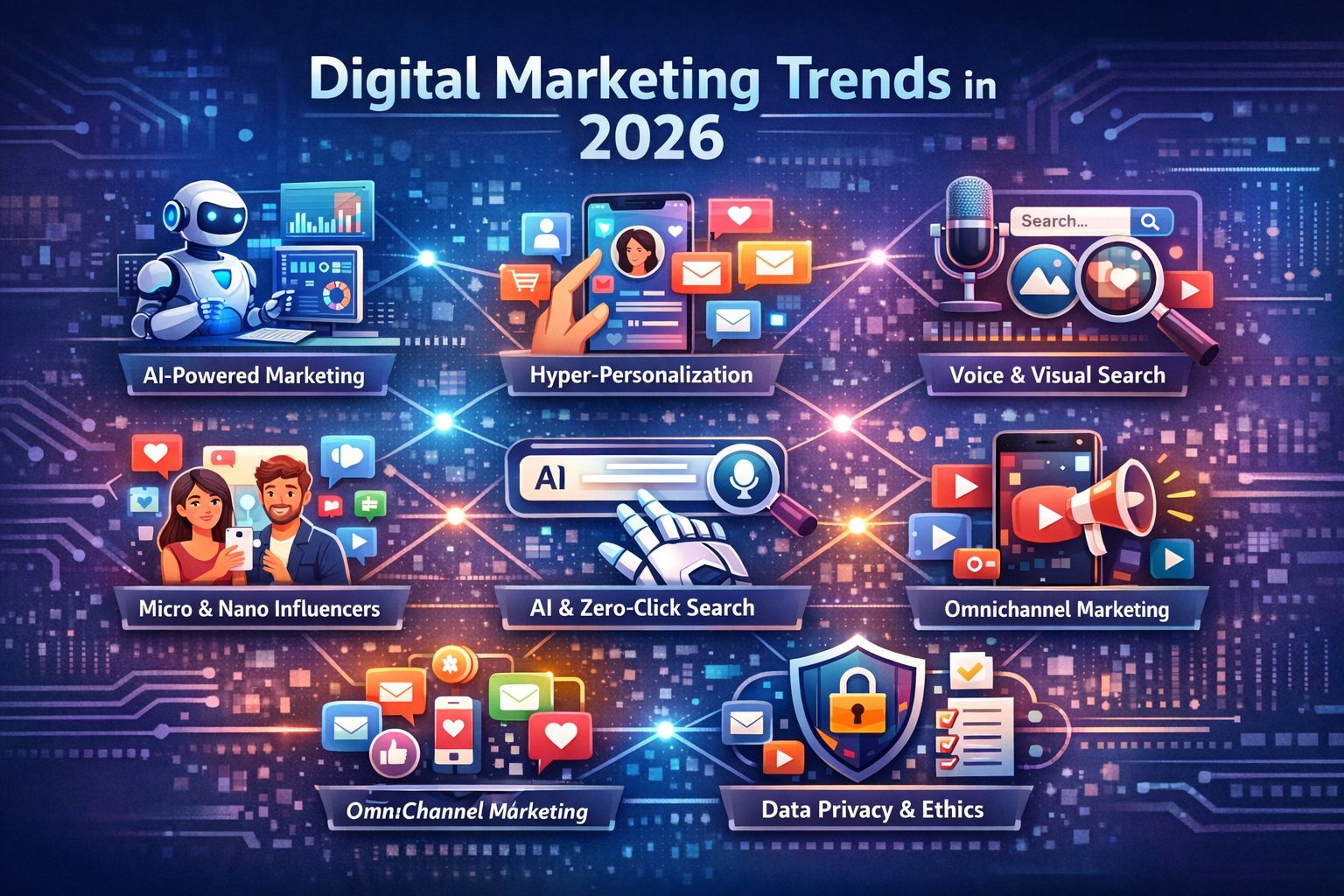
Digital marketing continues to evolve at a rapid pace, driven by advancements in technology, changing consumer behavior, and stricter data regulations. As we move into 2026, businesses can no longer rely on outdated strategies. Instead, they must adopt smarter, more personalized, and AI-driven marketing approaches to stay competitive. This article explores the most important digital marketing trends in 2026 and how brands can leverage them for sustainable growth.
1. AI-Powered Marketing Becomes the New Standard
Table of Contents
Artificial Intelligence (AI) is no longer optional in digital marketing—it is essential. In 2026, AI will dominate content creation, ad targeting, customer segmentation, and predictive analytics.
AI tools help marketers:
- Create personalized content at scale
- Predict customer behavior and buying intent
- Optimize ad campaigns in real time
- Improve chatbot and customer support experiences
Marketers who use AI responsibly will gain a strong competitive advantage by delivering highly relevant and timely experiences.
2. Hyper-Personalization Using First-Party Data
With third-party cookies becoming obsolete, brands are shifting toward first-party data strategies. In 2026, hyper-personalization will rely on data collected directly from users through websites, apps, email subscriptions, and CRM systems.
This trend focuses on:
- Personalized emails and website content
- Dynamic product recommendations
- Customized landing pages
- Location-based and behavior-based messaging
Consumers now expect brands to understand their needs without violating privacy.
3. Voice and Visual Search Optimization
Voice assistants and visual search tools are transforming how users search online. By 2026, optimizing for voice search SEO and visual search will be critical.
Key optimization strategies include:
- Conversational and question-based keywords
- Featured snippets and structured data
- Image SEO with alt text and metadata
- Mobile-first website performance
Brands that optimize for non-text searches will reach users earlier in the buying journey.
4. Short-Form Video Dominates Digital Platforms
Short-form videos continue to outperform other content formats across platforms like Instagram Reels, YouTube Shorts, and emerging social channels.
In 2026, successful video marketing will focus on:
- Authentic and relatable storytelling
- Educational micro-content
- Behind-the-scenes brand videos
- User-generated video content
Attention spans are shrinking, making short, impactful videos a powerful engagement tool.
5. Influencer Marketing Shifts Toward Micro and Nano Creators
Instead of celebrity endorsements, brands are collaborating more with micro and nano influencers who have smaller but highly engaged audiences.
Benefits include:
- Higher trust and authenticity
- Better engagement rates
- Lower campaign costs
- Niche audience targeting
In 2026, influencer marketing will prioritize long-term partnerships over one-time promotions.
6. Search Engines Powered by AI and Zero-Click Searches
Search engines are evolving with AI-generated answers, resulting in more zero-click searches where users get information without visiting a website.
To stay visible, marketers must:
- Optimize for featured snippets
- Focus on topical authority
- Use structured data markup
- Create in-depth, expert-driven content
SEO in 2026 is less about keyword stuffing and more about value and expertise.
7. Omnichannel Marketing and Automation
Consumers interact with brands across multiple platforms. In 2026, seamless omnichannel marketing will be essential.
This includes:
- Email, social media, SMS, and push notifications
- Consistent brand messaging across platforms
- Marketing automation tools for lead nurturing
- Unified customer journey tracking
Automation helps businesses scale campaigns while maintaining personalization.
8. Ethical Marketing and Data Privacy Compliance
Customers are more conscious of the use of personal data. Transparency and ethical marketing will influence brand trust and loyalty in 2026.
Key focus areas:
- Clear privacy policies
- Consent-based data collection
- Ethical use of AI
- Honest and inclusive messaging
Brands that prioritize trust will build long-term customer relationships.
Conclusion
Digital marketing trends in 2026 revolve around AI, personalization, privacy, video content, and omnichannel experiences. Businesses that adapt early will not only improve customer engagement but also achieve better ROI and brand loyalty. Staying updated with these trends is no longer optional—it is essential for digital success.
Frequently Asked Questions (FAQs)
1. What is the biggest digital marketing trend in 2026?
AI-powered marketing and hyper-personalization using first-party data are the biggest trends shaping digital marketing in 2026.
2. Is SEO still important in 2026?
Yes, SEO remains crucial, but it focuses more on content quality, user experience, topical authority, and AI-driven search results.
3. How important is video marketing in 2026?
Video marketing is extremely important, especially short-form videos that drive higher engagement across social platforms.
4. Will influencer marketing still work in 2026?
Yes, but the focus has shifted toward micro and nano influencers who offer authenticity and higher engagement rates.
5. How can small businesses adapt to digital marketing trends?
Small businesses can use affordable AI tools, focus on niche audiences, create short-form videos, and build strong first-party data strategies.
6. Is data privacy a ranking factor in digital marketing?
Indirectly, yes. Trust, transparency, and compliance improve brand reputation, user engagement, and long-term digital performance.
Trending