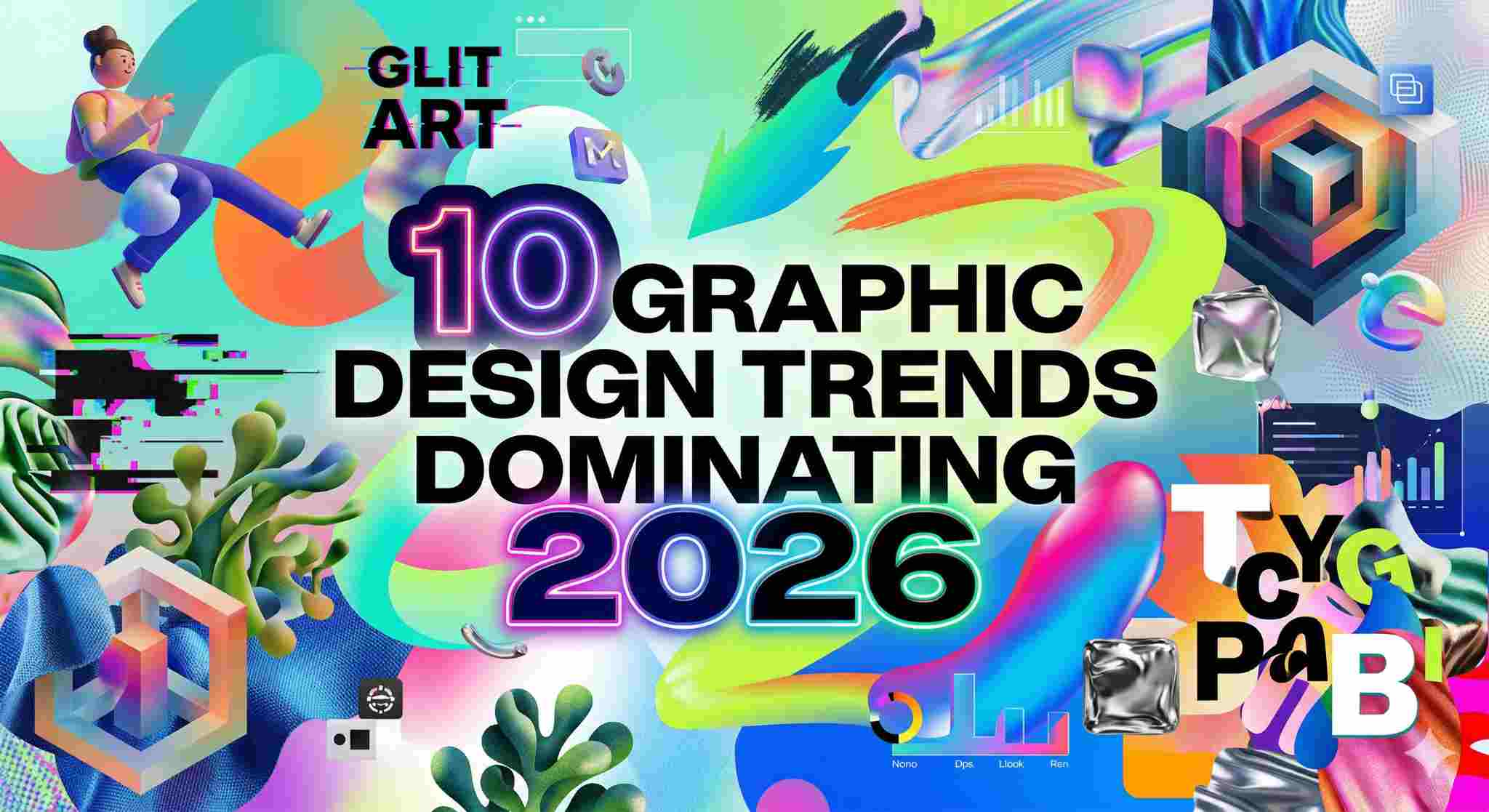
10 Graphic Design Trends Dominating 2026
Quick Answer
Table of Contents
The 10 graphic design trends dominating 2026 are: Anti-AI Handcraft, Tactile & Sensory Textures, Bold Expressive Typography, Motion-Driven Branding, Retro-Futurism, Naive & Doodle Design, Sculptural 3D Forms, Neo-Minimalism, AI-Assisted Workflows, and Cultural & Local Aesthetics. The overarching theme is “Imperfect by Design” — a human-first creative response to an AI-saturated visual world.
| +30% | 60% | +220% |
|---|---|---|
| rise in searches for hand-drawn & imperfect design elements (Adobe 2024) | of designers now use AI for early-stage concept work (Figma State of Design) | YoY growth in searches for "liminal" and "uncanny" aesthetics (Canva data) |
Design in 2026 is defined by productive tension. On one side: AI tools that accelerate ideation and automate the mechanical. On the other: a growing creative revolt — designers reaching for ink, texture, warmth, and deliberate imperfection as a counterpoint to algorithmic polish.
Canva’s 2026 forecast — based on analysis of over 260 million users — named this moment “Imperfect by Design”: a creative movement where imagination rules and creators bend AI to their own style. Here are the 10 graphic design trends you need to know for 2026.
01 Anti-AI Handcraft & Tactile Rebellion
The defining trend of 2026 — a deliberate revolt against algorithmic perfection.
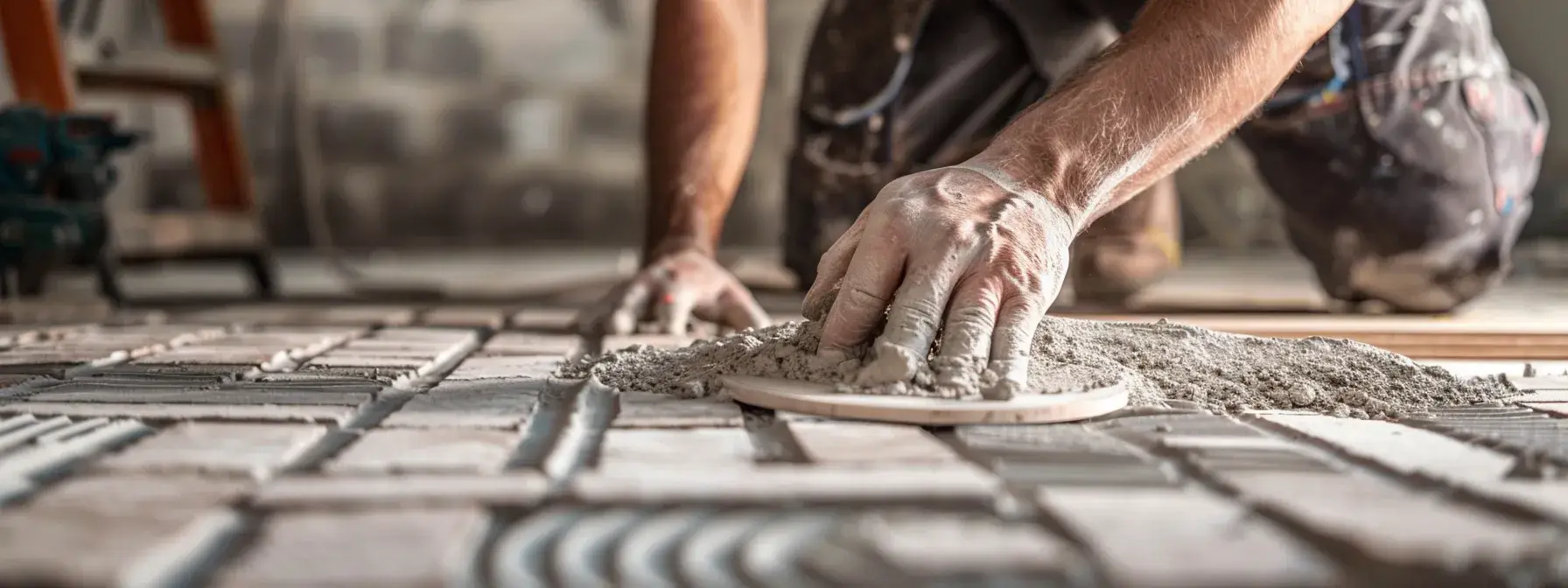
If there is one trend defining 2026, it is the deliberate rejection of AI’s hyper-polished aesthetic in favour of work that feels unmistakably made by human hands. Creative directors are calling this “Anti-AI Crafting” — designs built with hand-built sets, stitched texture, analogue surfaces, natural light, physical collage, ink, fabric, and clay. Scanning, scrapbooking, and mixed-media layering are returning because they produce the one thing AI still cannot replicate: genuine imperfection with emotional intent.
02 Tactile & Sensory Textures
Digital fatigue is producing strong demand for surfaces that feel physical. Puffy, squishy, and hyper-realistic textures are gaining ground alongside the revival of the 1980s magazine scan aesthetic — printing something, then scanning it back in to create soft, flattened, nostalgic warmth. These tactile choices build immersive experiences that transport audiences rather than just inform them.
03 Bold & Expressive Typography
Oversized sans-serifs, bubbly letterforms, wavy distorted fonts, and handwritten scripts are all centre-stage in 2026. The “Type Collage” approach — blending multiple fonts, sizes, and styles — creates instant visual energy. Ink-trap details, once purely functional in print, are now used expressively to introduce rhythm and character into typographic systems.
04 Motion-Driven Branding Systems
Logos, typography, and graphic systems are now conceived with movement in mind from day one. Brands are building dynamic identities that communicate rhythm, personality, and responsiveness across AI-driven interfaces, large-format displays, and interactive environments. Audiences now expect visuals that react, evolve, and feel alive in real time.
05 Retro-Futurism
Retro-futurism blends past visions of the future — chrome finishes, neon palettes, Y2K digital textures, lo-fi computing aesthetics — with contemporary precision. Searches for lo-fi and retro-tech styles are up 48.9% on Canva, including a 527% spike in “lo-fi aesthetic.” The aesthetic succeeds because it satisfies two simultaneous cravings: familiarity and forward-looking strangeness.
06 Naive & Doodle Design
Wobbly notebook-margin doodles are now on everything from streetwear to brand identities. Naive Design means knowing the rules of good design and bending them with skill and confidence. Simple lines, honest forms, and visuals that feel untrained but intentional create work that is genuine, lively, and full of character — the exact opposite of AI-smooth perfection.
07 Sculptural 3D & Abstract Forms
Oversized spheres, warped ribbons, and liquid-metal shapes are being used to inject depth into flat compositions. These surreal abstract forms do not need to carry literal meaning — they bring energy and modernity. Many are now interactive, reacting to cursor movement, scroll position, and device tilt via WebGL. Designers are building “atmospheric brand worlds” that adapt and feel genuinely alive.
08 Neo-Minimalism
Clean layouts are paired with single bold typographic moments, precise colour pops, or intricate micro-details. Pantone’s Color of the Year 2026, Cloud Dancer — a soft, warm off-white — embodies this spirit: encouraging layouts to breathe and inviting intentional visual focus. Neo-minimalism carries warmth and character; it lets one element dominate while everything else graciously recedes.
AI is becoming embedded in every stage of the design process — brainstorming, moodboarding, layout generation, and brand identity prototyping. 60% of designers now use AI for early-stage concept work (Figma, 2024). The savviest creatives treat AI as a design assistant: they brief clearly, iterate quickly, and always apply hand-refining for brand voice, accessibility, and the micro-details only a trained eye catches.
Patterns and symbols rooted in heritage, documentary-style photography, and typography inspired by regional traditions are gaining serious commercial traction. Adobe’s 2026 Creative Trends Forecast highlights local culture as one of its four core themes — noting that audiences connect more deeply with design that celebrates what is specific, not what is universal. Localism is a differentiation engine in an algorithmically flattened world.
Frequently Asked Questions
What is the biggest graphic design trend in 2026?
The biggest trend of 2026 is “Imperfect by Design” — a creative movement where designers intentionally embrace human imperfections, handcraft, and analogue textures as a direct response to AI-generated visual homogeneity. This spans branding, packaging, web, and editorial design globally.
Is AI replacing graphic designers in 2026?
No. In 2026, AI acts as a powerful creative partner — accelerating ideation and automating mechanical tasks. However, 60% of designers use AI only for early-stage concepts, with humans guiding creative direction, making editorial decisions, and providing emotional resonance that AI cannot organically produce.
What is Pantone’s Color of the Year for 2026?
Pantone’s Color of the Year for 2026 is Cloud Dancer — a soft, warm off-white that evokes clarity, calm, and openness. In graphic design, it guides designers toward simplicity, generous white space, and intentional visual focus.
What is retro-futurism in graphic design?
Retro-futurism is a design aesthetic blending past visions of the future — chrome finishes, neon palettes, Y2K digital textures, and lo-fi computing references — executed with contemporary precision. Searches for “lo-fi aesthetic” are up 527% on Canva in 2026.
How can designers stay relevant as AI handles routine tasks?
Designers stay relevant by applying human judgement, emotional intelligence, cultural understanding, and authentic imperfection — things AI cannot replicate. The 2026 trends of handcraft, naive design, cultural aesthetics, and motion branding all require genuine human authorship. The best designers use AI as a tool and reserve their creative energy for decisions that matter.
The 2026 Design Mandate: Human First, Tool Assisted
Every trend in this guide tells the same story: designers are negotiating AI’s growing influence without surrendering authorship. The visual language of 2026 is a recalibration — embracing motion, tactility, imperfection, and emotion as direct responses to a synthetic digital environment.
The brands and designers who succeed in 2026 will not be those who generate the most technically perfect imagery, but those who create work that makes people stop, feel something, and remember. Make it distinctly, deliberately human.
Trending